
Blog
Polycarbonate Roof Installation : Everything You Need to Know

Critical Considerations for Polycarbonate Roof Installation
One of the main usages of polycarbonate sheets on building and construction is as roofing skylights. As mentioned in our other article, Polycarbonate Roofing Design, polycarbonate sheet is an excellent solution when it comes to building a safe, long lasting, structure which at the same time allows plenty of light to pass through, or extra shade when needed.
As with any kind of roof installation projects, polycarbonate roof installation involves planning and preparation. One of the very first decisions to make is the choice between using VULCAN Corrugated, Solid Flat or Multi-Wall Hollow profiles. This will determine the type of structure be built, and accessories required. Explore the following sections in this comprehensive guide to polycarbonate roof installation to ensure a successful and safe project.
Safety Measures During Polycarbonate Roof Installation
| Safety Measures during installation : | |
| 1 | Use ladders, crawling boards and other safety equipment required for safe installation. Be sure to wear appropriate personal protection equipment such as proper gloves, safety glasses, etc. |
| 2 | Always use appropriate scaffolding to service panels. Scaffolding should provide proper worker safety and ensure proper placement and distribution of weight to avoid damage to panels. Do not walk on panels for fear of falling and other severe bodily harm. |
| 3 | Never leave VULCAN panels unattended on the roof until all the required fasteners have been appropriately installed or the panels secured to the supporting structure. |
| 4 | Always follow local and/or national building safety codes. |
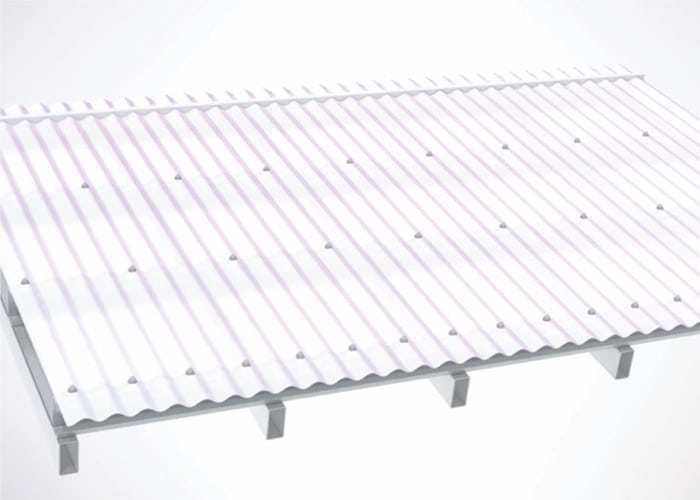
VULCAN Polycarbonate Corrugated profiles are suitable for single or multi-panel skylights or side lights in roofs and walls of metal-clad structures such as warehouses. They can also be used independently as a roofing or cladding material on type arrangements such as agricultural greenhouses.

Corrugated sheets are usually installed in either single panel or multi-panel runs, independent frames, or as side-laps where the VULCAN polycarbonate sheet edge corrugation has to be installed over the corrugation of the adjoining metal panel.

Once you have just finalized the number of purlins and rafters required for the whole polycarbonate roofing, we have devised a simple, easy to use Roof Sheeting Calculator that will give you a clear idea of the number of sheets and fasteners to prepare.
Instructions for Corrugated Polycarbonate Roof Installation
- Shed, Gable or Hip type Roofing Installation
- VULCAN sheets should be installed at pitch rates of 10 percent (1″:10″ slope or 5.7°) or more.
- If installed at a lower pitch, additional sealing should be applied to insure weather resistance.
- A minimum slope of more than 5% is recommended when installing.

- Panel Orientation –
- For multi-panel runs, begin installation of VULCAN on the side away from wind and rain direction.
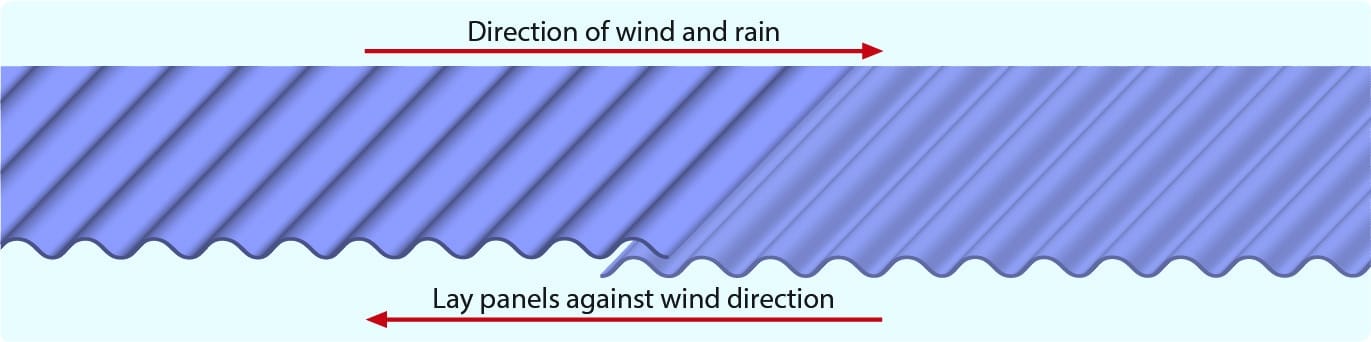
- VULCAN polycarbonate sheet surface is UV resistant, indicated by printing on the protected side. The protected side is up when panel edges are both pointing down.

- For multi-panel runs, begin installation of VULCAN on the side away from wind and rain direction.
- Fastening – Please contact your local dealer for a detailed fastening schedule of each corrugated profile.
- Use only VULCAN Polycarbonate Crest Fixing Fasteners when VULCAN Polycarbonate sheets are installed as roof panels.
- It is imperative that fasteners should only be fixed on crest corrugations on rooftops.
- For multi-paneled runs, apply sealing tape over side-lap corrugation crests, where covered by the next panel.
- Start fastening the screws from the first side-lap, starting from the lower edge purlin (end-lap).
- Sealing VULCAN polycarbonate roofing sheets –
Top & Bottom Contoured End Closures – Top or bottom matching closure strips close the clearance above or below the panel and its corrugations.
Install as follows
Place the closure strip at the top or bottom edge fasteners’ center-line, and insert the fasteners through the said strip so it will be held firmly in place. A few dabs of silicone could hold the strip temporarily in place until the top panel is laid and screws are inserted.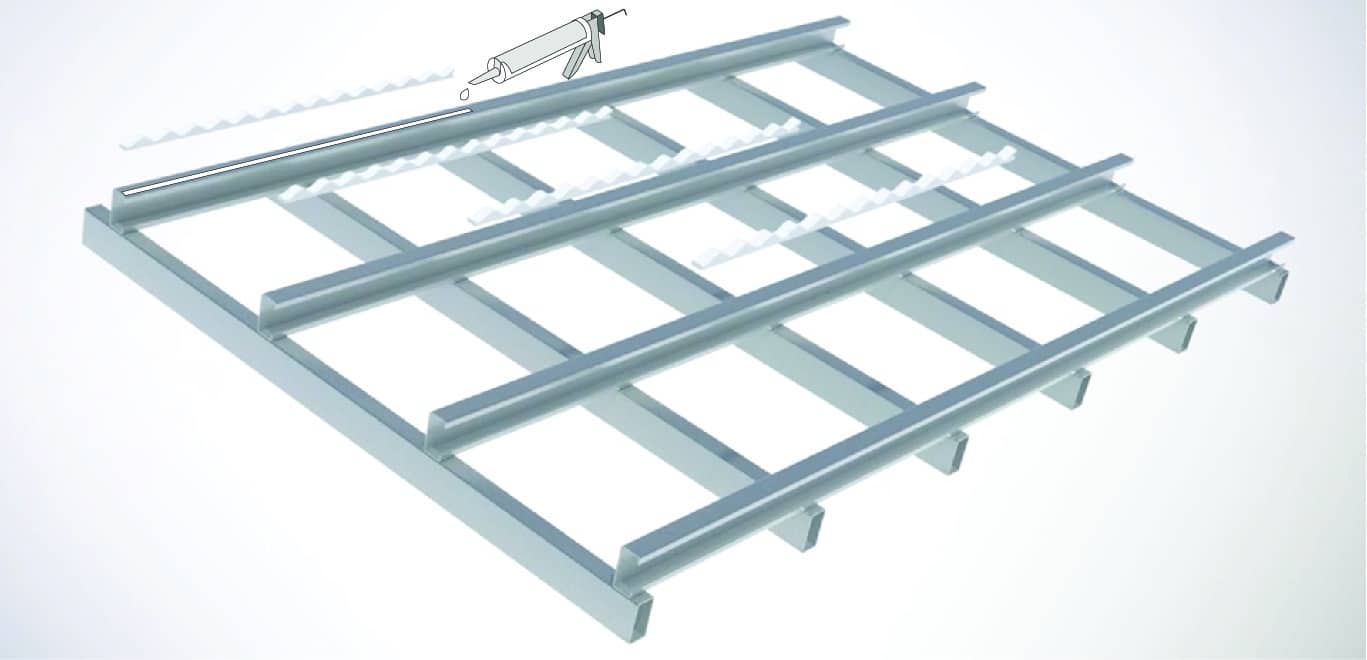
• Location A
Where VULCAN panel runs reach the top or bottom of roof or wall edges, or at the roof ridge, the space left between the panel’s profile and the purlin, or girt, should be closed and sealed with a contoured foam, polyethylene-vinyl acetate (EVA) or expanded-polyethylene (EPE) closure strip matching the panel profile.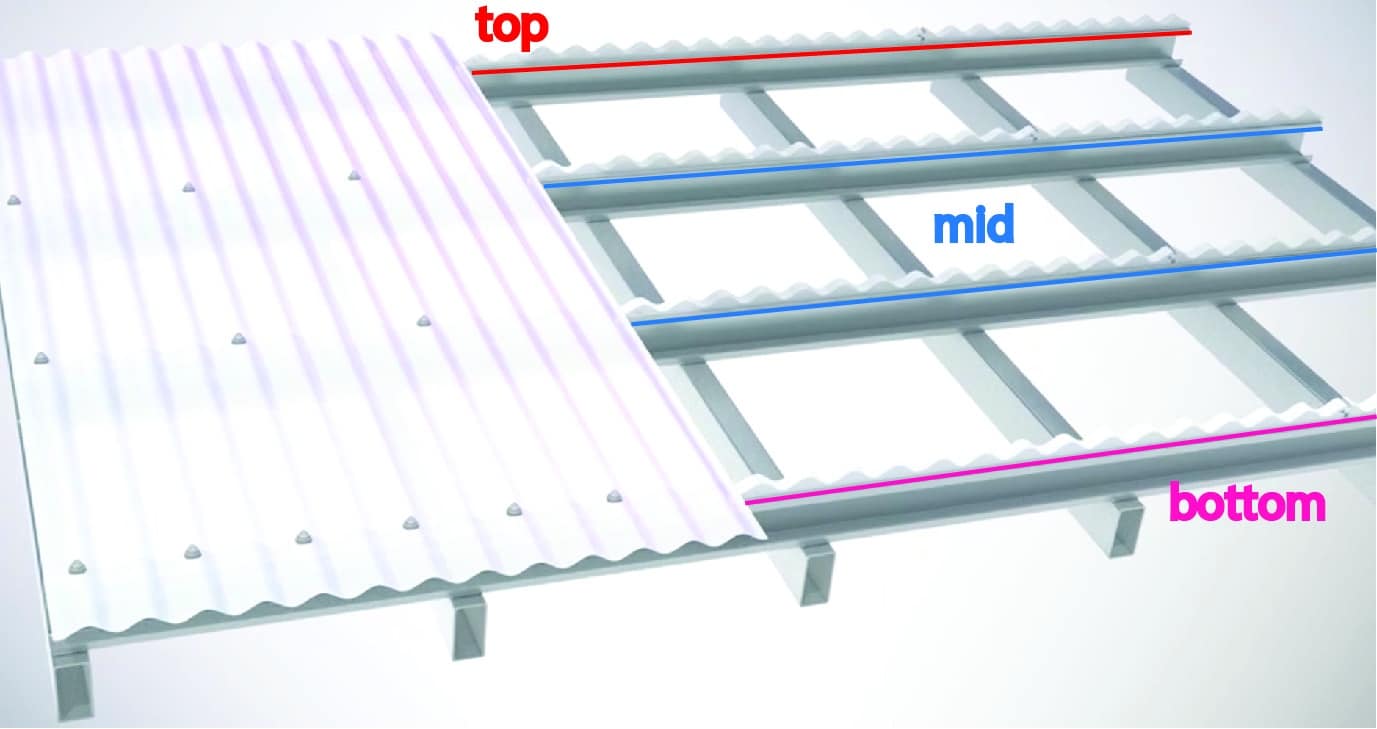
• Location B
Where VULCAN panels runs reach a top trim, or at a ridge-cap, a top closure strip should be used at the top edge above the panel.
It’s important to note that the above is to provide a general overview of the polycarbonate roof installation process, and the specific instructions may vary depending on the design of the polycarbonate roofing system you are using.
VULCAN Polycarbonate Solid Flat profiles are suitable for single or multi-panel skylights or side lights in roofs and walls of metal-clad structures. They can also be used independently as a roofing or cladding material on Shed, Gable, Hip or Dome type arrangements.

Solid Flat or Embossed sheets are usually installed in either single panel or multi-panel runs, independent frames such as pergolas, canopies, or sound barriers.
Instructions for Solid Flat or Multi-Wall Hollow Polycarbonate Roof Installation
- Shed, Gable or Hip type Roofing Installation
- VULCAN sheets should be installed at pitch rates of 10 percent (1″:10″ slope or 5.7°) or more.
- If installed at a lower pitch, additional sealing should be applied to insure weather resistance.
- A minimum slope of more than 5% is recommended when installing.
- Polycarbonate sheet surfaces should come with UV resistant surface coating, indicated by printing on the protective film. The protected side should be facing against the sun.
- Framing Method (Also known as Rabbet Fixing or Install by Insertion)
Solid Flat or Multi-Wall Hollow sheets can be mounted in most existing frames made of wood, rigid PVC, aluminum or other metals. It is recommended to use neoprene or Silicone Rubber or EPDM packing (never use soft PVC) to secure the sheet in its frame, rather than fixing with screws. Insert depth is crucial when it comes to polycarbonate sheet framing, so the load and expansion rate should be taken into consideration. Frame depth, or Rabbet Depth is the Edge Engagement + Expansion Allowance. - Glazing Bar System Fixing
This is one of the most common fixing method for flat profiled sheets. The main advantage is that once the sheets are cut to size, there are no physical alterations of any kind involved, and the structural integrity of the polycarbonate is preserved. Glazing bars systems often come in a top and bottom setup. The polycarbonate sheets are first placed on bottom glazing bar channels, checked if the gaps in between are equal, before the top glazing bar is clamped down and then fixed together with the bottom glazing bar, to the substrates underneath, with the polycarbonate sheets sandwiched in between.

- Sealing polycarbonate roofing sheets –
Silicone Rubber or EPDM packing are cushioned in between the polycarbonate sheets and the frame or glazing bars. Never use PVC as the it releases chemicals that damages polycarbonate and creates spider web micro cracks over time.
Related articles:
How to Fix Polycarbonate Sheet?The Complete Guide
How to Cut Polycarbonate Sheets? Preparations Prior to Cutting Polycarbonate Sheets
Polycarbonate Roofing Design : When Functionality Meets Style