
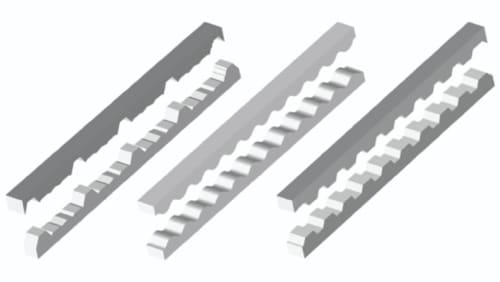
VULCAN Eave EVA Foam Fillers
VULCAN Eave EVA Corrugated Foam Fillers
Eave foam fillers are usually sandwiched between the polycarbonate or metal roofing sheets and the purlins which they are affixed to and should be used on all areas where the corrugated profiles come in contact with the structure.
Not only does it provide a layer of protection from rubbing and scratches, but also prevents wind noise and potential roof rattling.
VULCAN EVA Corrugated Foam fillers differ from other brand products in that their mechanical properties such as density, hardness, elongation, tensile, tear, and compression strength are much higher and can therefore withstand more weight and pressure from the elements.
What is EVA?
EVA, short for Ethylene-Vinyl Acetate, also known as polyethylene vinyl acetate, an elastomeric polymer with a rubber-like softness and flexibility. EVA is easy to color, has good toughness, and stress-crack resistance, is waterproof, and is resistant to UV radiation. When manufactured to the foam rubber form, its light weight, water impermeability, light weight, and shock absorber properties makes it a good building material, especially as a foam filler and edge sealer for VULCAN Corrugated circular and angular polycarbonate skylight sheets.
Where Are Corrugated Foam Infill Used?
Corrugated foam fillers are high-performance sealing components engineered to block voids and gaps in modern roofing systems. To ensure complete weatherproofing, these molded profiles are strategically installed in the following areas:
Eaves and Low Roof Edges
Placed between the corrugated panels and the structure to act as a barrier against wind-driven rain, birds, and insects.
Under Roof Ridge Caps
Fitted tightly beneath the ridge flashing to prevent dust, backflow water, and debris from penetrating the roof peak.
Wall Flashing Intersections
Installed wherever corrugated sheets meet flat walls or parapets to close off any irregular gaps.
Between Roofing Panels and Purlins
Positioned directly on supporting beams to absorb thermal expansion, cushion structural movement, and eliminate wind rattling noise.
Ultimately, corrugated foam fillers are used at any junction where a corrugated profile meets a flat surface, ensuring a fully sealed and protected building envelope.
Why Corrugated Foam Infill Matter?
Without proper sealing, even the most durable metal or polycarbonate roofing can fail due to environmental exposure. Installing high-quality corrugated foam infill is crucial for several key reasons:
1. Prevents Costly Water Damage
It creates an impenetrable barrier at the eaves and ridges, stopping heavy rain and wind-driven moisture from leaking into the ceiling and causing mold or structural rot.
2. Blocks Pests and Birds
The custom-molded profile completely seals the irregular gaps of corrugated sheets, preventing birds, bats, rats, and insects from nesting inside the roof cavity.
3. Eliminates Wind Rattling and Noise
Strong winds can cause roofing sheets to vibrate against the purlins. Corrugated foam infill acts as a cushion, absorbing vibrations and significantly reducing annoying roof rattling noises.
4. Improves Energy Efficiency
By sealing off open gaps, it minimizes drafts and uncontrolled airflow, helping to maintain indoor temperatures and lower heating or cooling costs.
VULCAN Eave EVA Foam Filler Profile Selection
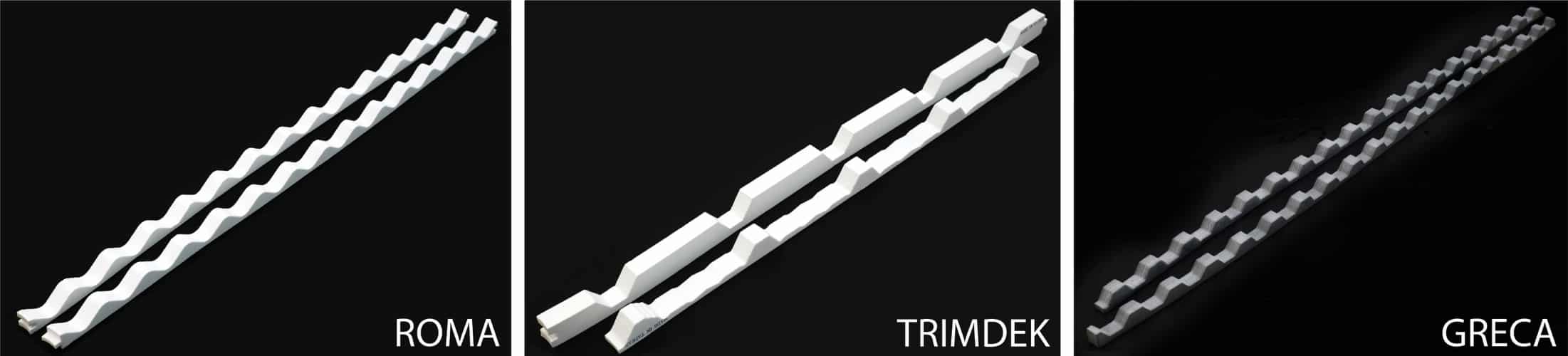
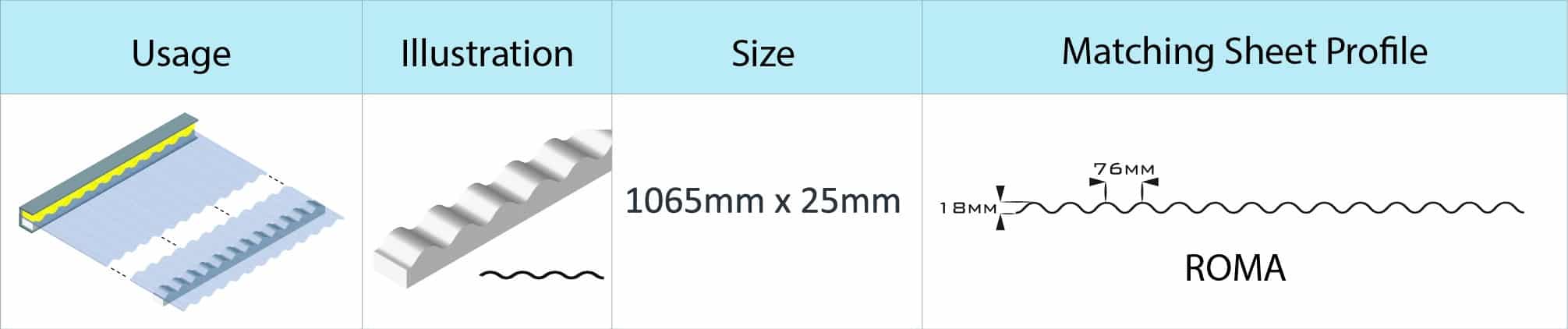
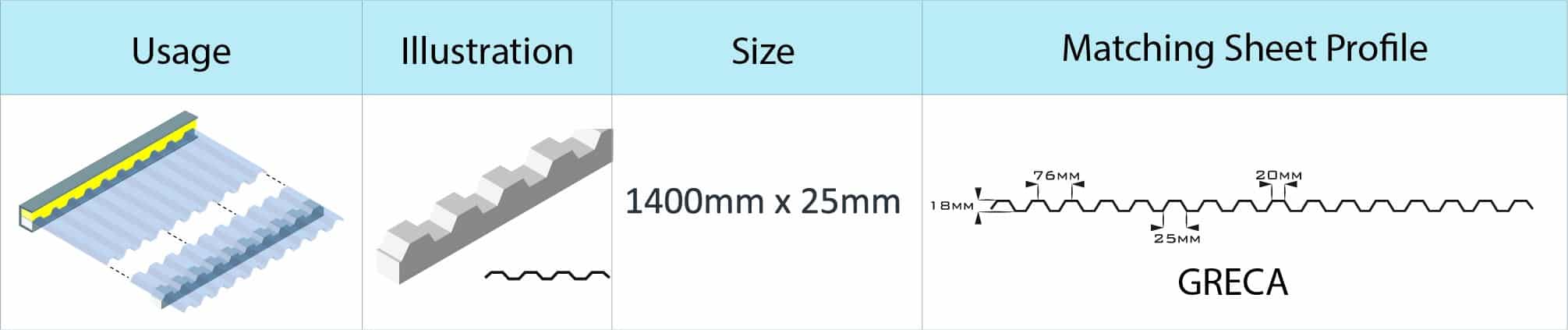
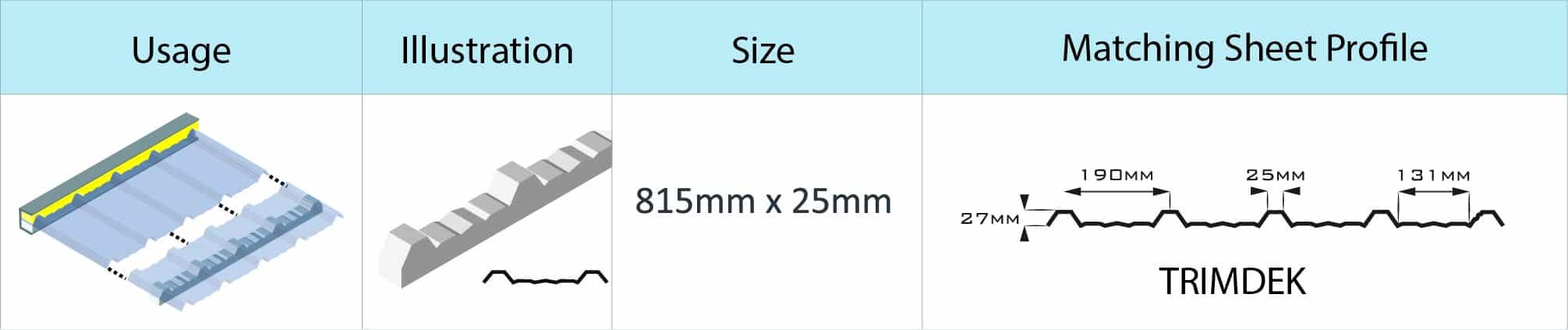
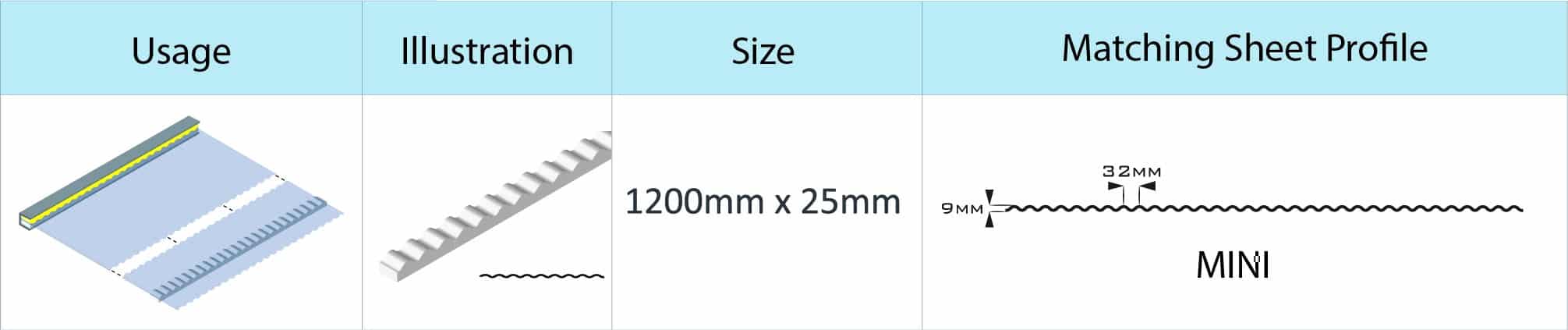
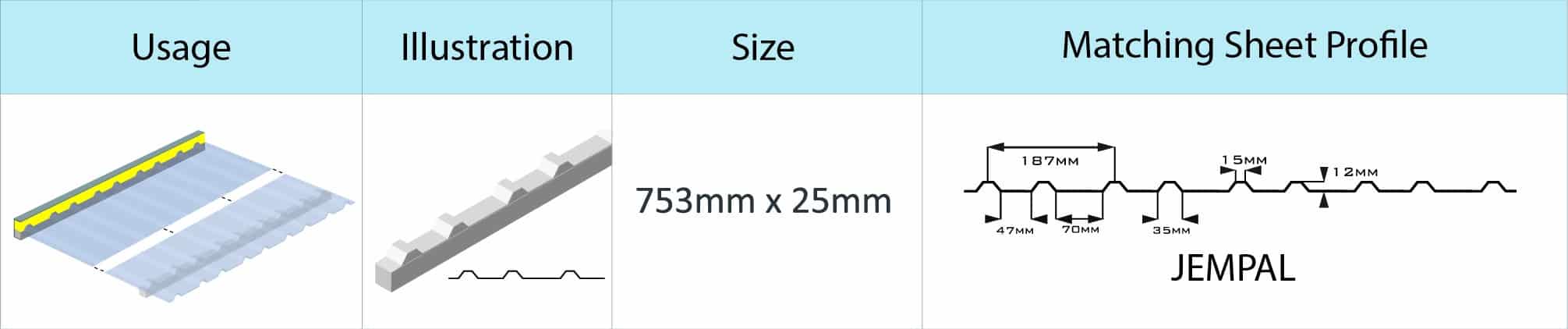
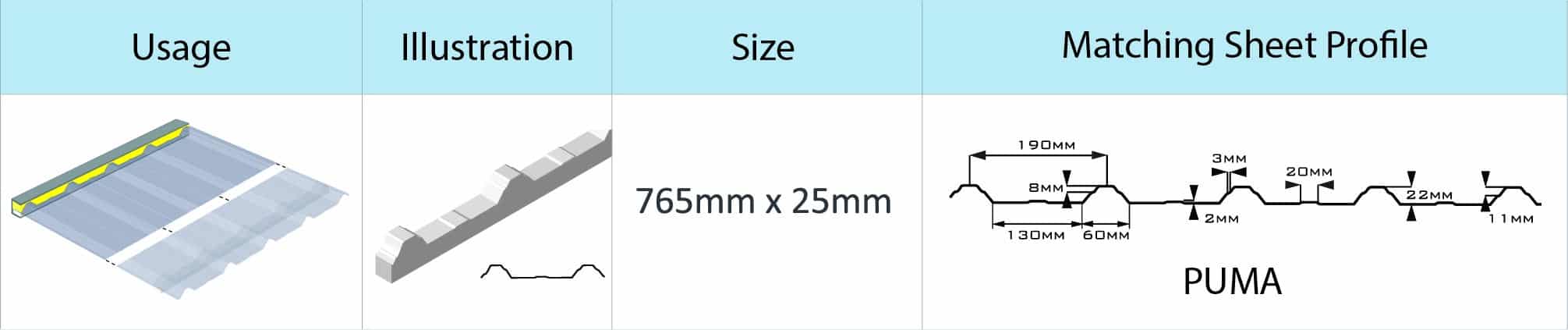
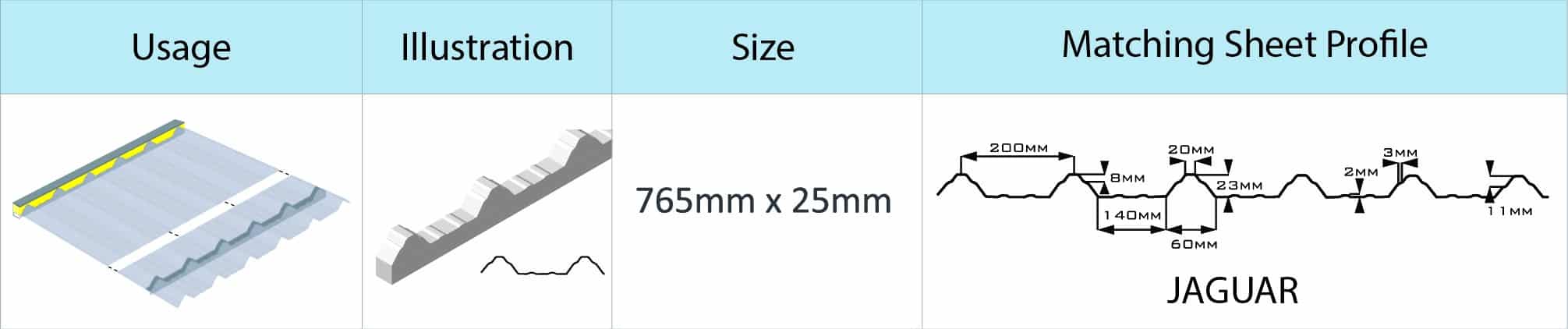
VULCAN Eave EVA Foam Fillers are made to match each of the individual polycarbonate corrugated profiles we offer.
ROMA Profile Foam Infill
GRECA Profile Foam Infill
TRIMDEK Profile Infill
Mini Profile Foam Infill
JEMPAL Profile Foam Infill
PUMA Profile Foam Infill
JAGUAR Profile Foam Infill
FAQs for Corrugated Foam Infill
Navigating roof sealing options can be challenging, but choosing the right profile is critical to protecting your structure. Below, we have compiled answers to the most frequently asked questions about corrugated foam infill to help you achieve a seamless, weather-tight installation for your metal or polycarbonate roofing project.
Q1. Can I use any foam infill for my corrugated roofing sheets?
No. Corrugated foam infill strips are profile-specific. Because different roofing sheets have distinct wave heights and pitches, you must select the exact matching foam profile to ensure a 100% airtight and watertight seal.
Q2. Do I need to use glue or adhesive to install corrugated foam infill?
It depends on the specific product. Many premium corrugated foam infill strips come with a convenient self-adhesive backing to hold them in place on the purlins during installation. If yours doesn’t, the pressure from the fastened roofing sheets will naturally hold the foam securely in place.
Q3. How long does EVA corrugated foam infill typically last?
High-quality EVA foam is engineered for heavy-duty outdoor use. Thanks to its excellent UV resistance, closed-cell waterproof structure, and flexibility, it typically lasts 10 to 15 years without cracking or shrinking, depending on local climate exposure.
Q4. Will corrugated foam infill trap moisture and cause the metal roof to rust?
No, provided you use premium closed-cell EVA foam. Closed-cell corrugated foam infill does not absorb or sponge up water. Instead, it acts as a solid moisture barrier, actually preventing rainwater from getting trapped against the metal or steel structure.
In short, investing in the right corrugated foam infill is the simplest yet most effective way to ensure a leak-free, pest-proof, and quiet roofing system for years to come.
Recommend reading:
Polycarbonate Roof Installation : Everything You Need to Know
UV-Resistant Polycarbonate Sheet Guide: 10 Reasons to Choose