
Blog
Greenhouse Materials: How to Pick the Right Frame and Covering

What Makes Greenhouse Materials Essential for Success?
The selection of proper greenhouse materials is crucial for any growing project. Among all of the materials used to build a proper greenhouse, the framing and covering account for more than half of the required materials in terms of size and quantity, working together to provide a controlled environment for growing plants and food.
What makes a right frame and covering of a greenhouse? For a start, we know that light transmission, heat retention, and general plant health can all be greatly impacted by the type, characteristics, and functions of the roof, which basically means that the type of covering should be chosen first, which then determines the type of frame and structure that is required.
Greenhouse Materials: A Detailed Comparison between 5 types of Covering Options
Among modern greenhouse materials, for maximum clarity and sunlight penetration, the best material choice available on the market has to be either polycarbonate or glass. None of the other glazing materials available on the market comes close to the combined properties that polycarbonate and glass offers – Acrylic/PMMA sheets come close in terms of clarity, though it requires extra post-processing to make it shatter proof.
Let‘s examine each covering material in detail, analyzing their specific advantages and limitations to help you make an informed decision for your greenhouse project :
Glass
- Pros:
Excellent light transmission, long-lasting, aesthetically pleasing. Tempered glass is capable of withstanding heavy wind and hail, and offers good impact resistance.
- Cons:
Heavy and requires an equally heavy and strong frame or structure. Un-tempered glass is prone to shattering under impact, which may harm any living organism underneath. The cost of the project will be the highest among the suggested greenhouse materials in this article.
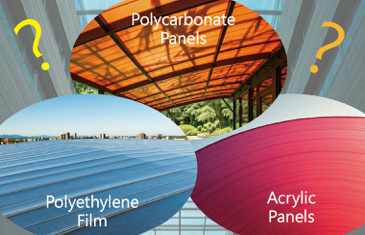
Polycarbonate Panels
- Pros:
Extremely durable and impact resistant. Even standard polycarbonate panels will not break or shatter upon impact. It offers excellent light transmission, on par with glass, and can be physically or chemically altered to provide additional properties such as infrared reflection, heat blocking, fire resistance, and anti-static, to name a few. Requires only light to moderate weight structures and frames to support, saving overall project cost.
- Cons:
Although a cheaper alternative to glass, it is still the highest priced among commercially available plastic glazing materials on the market.
Read more: What Is Polycarbonate Roofing? Pros and Cons List
Polyethylene Film
- Pros:
Extremely affordable, light weight, easy to install, and offer great light diffusing properties.
- Cons:
The least durable among the greenhouse covering materials listed here, and prone to damage due to its physical properties (plastic film). It offers the least amount of light transmission rate among the three and is less suitable in areas where light conditions are already low. Due to its shorter lifespan, replacement may be required every few years.
Acrylic Panels
- Pros:
Other than shatter and impact resistance properties, Acrylic panels offer almost identical properties as polycarbonate panels. They are pretty much within the same price range when both are produced with 100% virgin material. Acrylic panels can also be re-polished to a like-new condition when scratched whereas polycarbonate panels cannot.
- Cons:
It is prone to scratches but can be re-polished to look new. It has low impact resistance and shatters quite easily, but can be enhanced with post-hardening processes, albeit at a very high price.
Read more: Acrylic Glass vs Polycarbonate: Which is Better for Your Needs?
Fiberglass Panels
- Pros:
Fiberglass panels are lightweight and very affordable, and they use the same light to moderate-weighted supporting structure and framing. They are quite opaque in nature, offering good light diffusing and properties. Strength can be enhanced by increasing the percentage of fibers within the panels, which comes at a cost of lower light transmission rate.
- Cons:
Due to its opaque and less transparent nature, it is less suitable for areas that require ample light penetration. It also discolors significantly over time, decreasing its physical strength and weathering resistance.
This comparison table highlights the pros and cons of five common greenhouse and glazing materials – Glass, Polycarbonate, Polyethylene Film, Acrylic, and Fiberglass to help you choose the ideal option for your project.
| Greenhouse Material | Pros | Cons |
| Glass | Excellent light transmission Weather resistant | Very heavy Shatter risk Highest cost |
| Polycarbonate Panels | Extremely durable Great clarity Highly customizable Cost-effective framing | Premium pricing for plastic |
| Polyethylene Film | Highly affordable Good light diffusion | Least durable Lowest light transmission Short lifespan |
| Acrylic Panels | Similar to Polycarbonate Comparable cost Renewable surface | Prone to scratches Lower impact resistance |
| Fiberglass Panels | Lightweight & Affordable Good diffusion Adjustable strength | Reduced transparency Severe weathering |
5 Important Considerations for Frame Selection
Once you have decided on the covering material, the next step is to choose a suitable frame material. Frames and structures are the backbone of a greenhouse structure. They must be strong enough to not only support the covering, but also capable of coping with local environmental and weather conditions. Natural disasters such as hailstorms might be few and far between, but it is always better to be overcautious than ill-prepared.
There are a couple of things to consider when picking out the right frame.
1. Covering Chosen
- Glass – Requires stronger and heavier frame material to withstand the weight.
- Polycarbonate – Depending on the thickness and profile of the panel, either moderate-weight or light-weight framing material can be used, and is the most versatile.
- Polyethylene – Among greenhouse materials, it requires the lightest frame and structure of all the listed coverings.
- Acrylic – Similar in weight and physical characteristics of polycarbonate panels, one can also choose moderate-weight or light-weight framing material.
- Fiberglass – Being quite light, easy to install, and low-cost in nature, fiberglass is the most common light weight framing material.
2. Climate
- In high winds and snowy areas, it’s better to opt for stronger frame material such as steel. Timber and Aluminum can also be good choices if they are made larger in size, and cleverly built to withstand more load.
3. Purpose
- For commercial use, investing in durable materials like steel and aluminum might be a better choice.
- For hobby greenhouses, light wooden or aluminum frames paired with PE film or Polycarbonate panels will be sufficient.
4. Budget
- If cost is a concern, PVC frames and polyethylene coverings are affordable but may require frequent replacements.
- Higher initial investments in aluminum or steel frames and polycarbonate panels can save money in the long run.
Read more: Polycarbonate Sheets Prices: How to Choose the Right Grade?
5. Maintenance
- Glass and wood require regular upkeep, while aluminum and polycarbonate demand minimal maintenance.
Frequently Asked Questions: Greenhouse Materials
Choosing the right greenhouse covering is a critical decision that directly impacts crop yield, energy efficiency, and long-term maintenance costs. To help navigate the complexities of light transmission, durability, and budgeting, here are the most frequently asked questions regarding greenhouse glazing materials.
Q1. Can I fix scratches on acrylic and polycarbonate panels?
Acrylic panels can be buffed and re-polished to a like-new condition when scratched. Polycarbonate, however, cannot be easily re-polished because it has a softer surface that is often treated with a protective anti-UV coating, which would be destroyed by polishing.
Q2. Which greenhouse material offers the best overall durability?
Polycarbonate panels are widely considered the most durable option. They are virtually unbreakable, highly impact-resistant against hail, and can withstand extreme weather conditions far better than glass or polyethylene film without shattering.
Q3. Is glass still a good option for modern greenhouses?
Yes, glass remains the premium choice for permanent structures due to its unparalleled light transmission, aesthetic appeal, and lifelong durability. However, it requires a heavy-duty, costly supporting frame and lacks the impact resistance of modern plastics unless tempered glass is used.
Q4. Why would someone choose fiberglass over other materials?
Fiberglass is chosen primarily because it is budget-friendly and offers excellent light diffusion. The scattered light prevents shadows and ensures even distribution throughout the greenhouse, though it does tend to yellow and degrade faster than polycarbonate over time.
Choosing Professional Polycarbonate Solutions
Finding the right balance between cost, form, and function when picking the right greenhouse materials might seem confusing or complicated, but by doing a little research and being persistent, it won’t be too hard to find information and choose the perfect combination to suit your needs.
For premium polycarbonate solutions, please leave a message on Vulcan Plastics, send an email, or contact us by phone or on social media.
Related articles:
Designing A Greenhouse: Benefit, Considerations, and Materials!