
Blog
10 Types of Awning Explained: Key Differences, Benefits, and FAQs


Outdoor awnings have always been the choice for added protection and usability of outdoor space, especially when used as an extension of the existing structure, creating a shielded area from the elements, allowing for an enjoyable patio or deck regardless of weather conditions.
Awnings can generally be divided into retractable awnings and fixed awnings, each offering unique features and benefits. The material used for these types of awnings depends primarily on its function and budget.an be categorized into four general types – Fixed, Retractable, Cassette, and Specialty type, each with their own features, and benefits. The material used depends primarily on its function and budget.
7 Types of Awning: Fixed Awnings
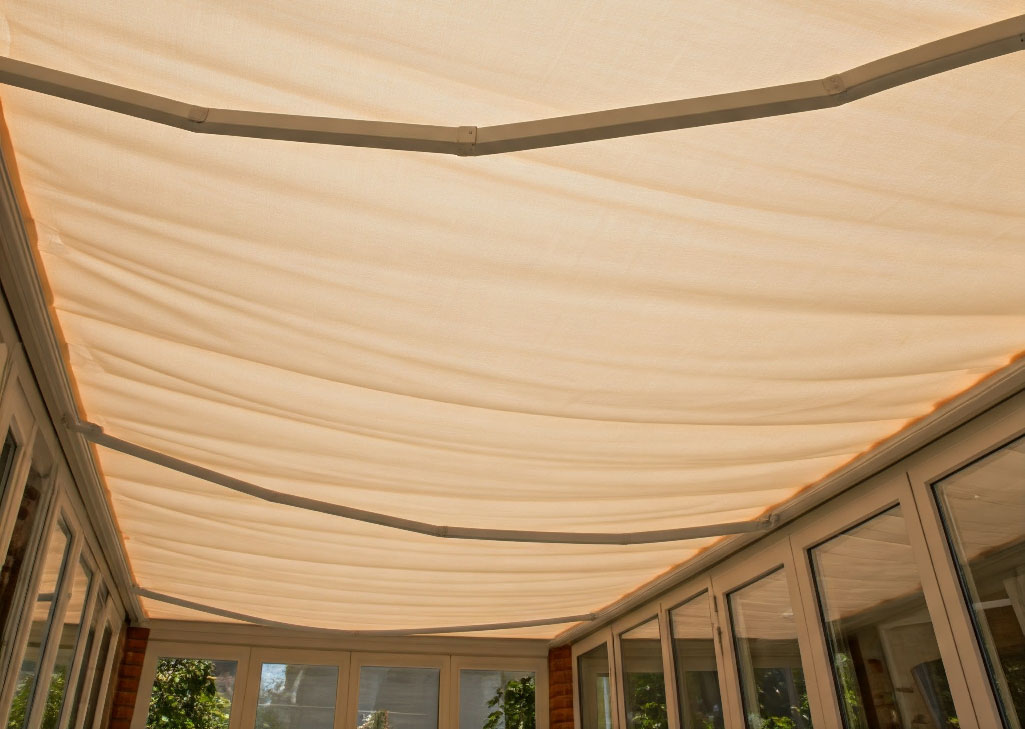
1. Conservatory Awning
With its name originating from glass conservatories, conservatory awnings can be installed internally or externally, to fit over the roof or the sides of a conservatory. Internal designs are excellent for temperature control and heat reduction, while external designs offer better glare protection from the sun. Conservatory awnings also enhance privacy and are considered on the of the most unique styles of awning.
Benefits: Most conservatory awnings are remote controlled, making it easy to manage the conservatory’s climate for optimal comfort and temperature control, while providing an extremely convenient and efficient to maintain a pleasant indoor environment.
2. Patio Awning
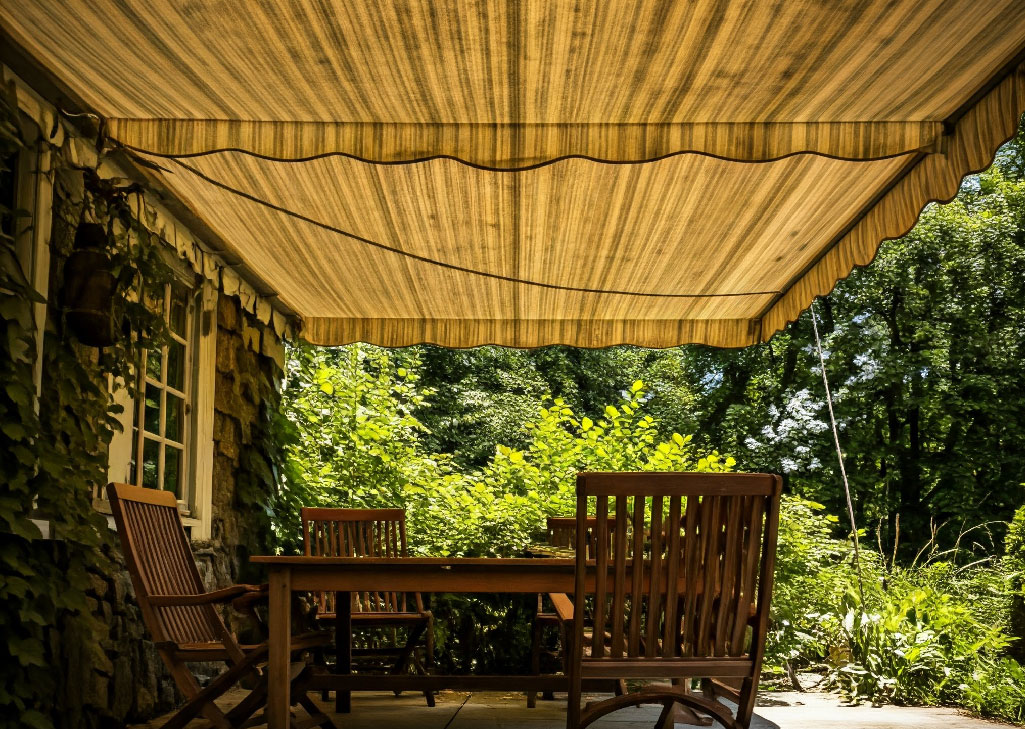
A typical patio awning is fixed to the wall as an extension over an outdoor patio or decking space. Patio awnings provide reliable protection for the outdoor living space against wind, rain and UV exposure, making them one of the most versatile types of awnings.
Benefits: With a patio awning, you can enjoy your outdoor area throughout the year, regardless of the weather.
Visit our comprehensive guide to learn more about patios and their roofing options.
3. Vertical Awning
Vertical awnings are window-like covering that stretch and move vertically. These types of awnings are similar to curtains, except that they are covering from the outside instead of indoors. Like curtains, vertical awnings are designed to protect against the sun, rain, and wind. They can also be used as privacy screens, making them versatile for various outdoor settings.
Benefits: These awnings are ideal for creating sheltered and private spaces, enhancing the usability and comfort of your outdoor areas. Vertical awnings provide protection and add an element of privacy, making your outdoor space more enjoyable and functional.
4. Veranda Awning
Veranda awnings extend over outdoor veranda spaces, and usually a roofed area attached to the front or back on the ground level of the house, on two or more sides of the main building. Veranda awnings provide excellent shade and weather protection and are especially useful when used to cover access to the entrance of the building. When the Veranda is used as a gallery or ground floor balcony, an awning is added to create an informal, open-air seating area that is comfortable and sheltered for relaxation and entertaining.
Benefits: Veranda awnings can be customized to fit various sizes and styles, enhancing the overall look of your home while making your outdoor space more usable throughout the year.
5. Balcony Awning
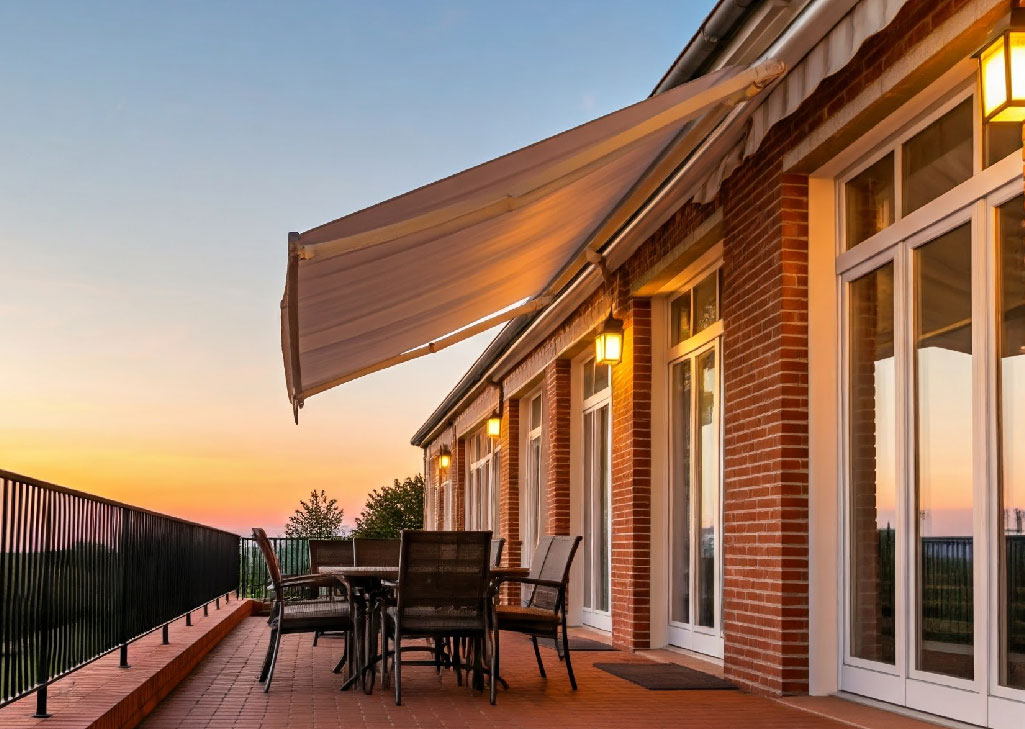
Balconies are elevated platforms that extend from the wall and affixed to the upper floors of buildings. They are common in multi-level houses and apartments with access from the window or doors. Balcony awnings are designed to fit its dimensions and offer protection from the sun and rain, and can be fixed or retractable, providing flexibility based on your needs.
Benefits: Retractable awnings can be adjusted accordingly to control the amount of sunlight that enters a room or windows. They can also enhance privacy and comfort, allowing you to enjoy your balcony in different weather conditions while also adding to the aesthetic appeal of your building.
6. Freestanding Awning
A freestanding awning is a standalone canopy designed which provides shade and shelter as does all types of awnings but without attaching to a building, which is often used where structural conditions do not allow attachments. This design provides great versatility and mobility, allowing you to place them anywhere, such as over pools or in large open spaces.
Benefits: Freestanding awnings’ versatility makes them perfect for creating shaded areas wherever needed. They offer flexible solutions for various outdoor activities and gatherings, providing protection and comfort in any location.
7. Pergola Awning
Pergola awnings combine structural stability with elegant design. They can be made from various materials, such as wood, aluminum, or PVC-coated polyester, and offer a range of styles to suit different tastes.
Benefits: Pergola awnings provide year-round weather protection, making them an excellent choice for enhancing outdoor living spaces. The sturdy design ensures durability, while the material options allow customization to match your aesthetic preferences and functional needs.
3 Types of Awning: Retractable Awnings
1. Motorized Awnings
Motorized awnings come with motorized mechanisms for easy operation via remote or switch, which is convenient and easy to operate, perfect for large span or hard-to-reach areas.
Benefits: Motorized awnings are generally low-maintenance and inexpensive to maintain, with only regular checks required for the motors. It is also possible to override and operate manually if the motor fails unexpectedly.
2. Portable Awnings
Portable awnings are lightweight, movable awnings that can be set up and taken down easily for the sake of mobility, which is the awning of choice for temporary or seasonal use. Being portable, this type of awning is ideal for the occasional outdoor event, camping, or spaces where permanent structures are not available nor practical to set up. Portable awnings are less stable due to being mobile; anchoring will be necessary in high wind areas or windy conditions, and may have to be taken down when situations get worse.
Benefits: Portable awnings are extremely mobile and usually seasonal, though some materials are designed to be used year round in varied weather.
3. Cassette Awnings
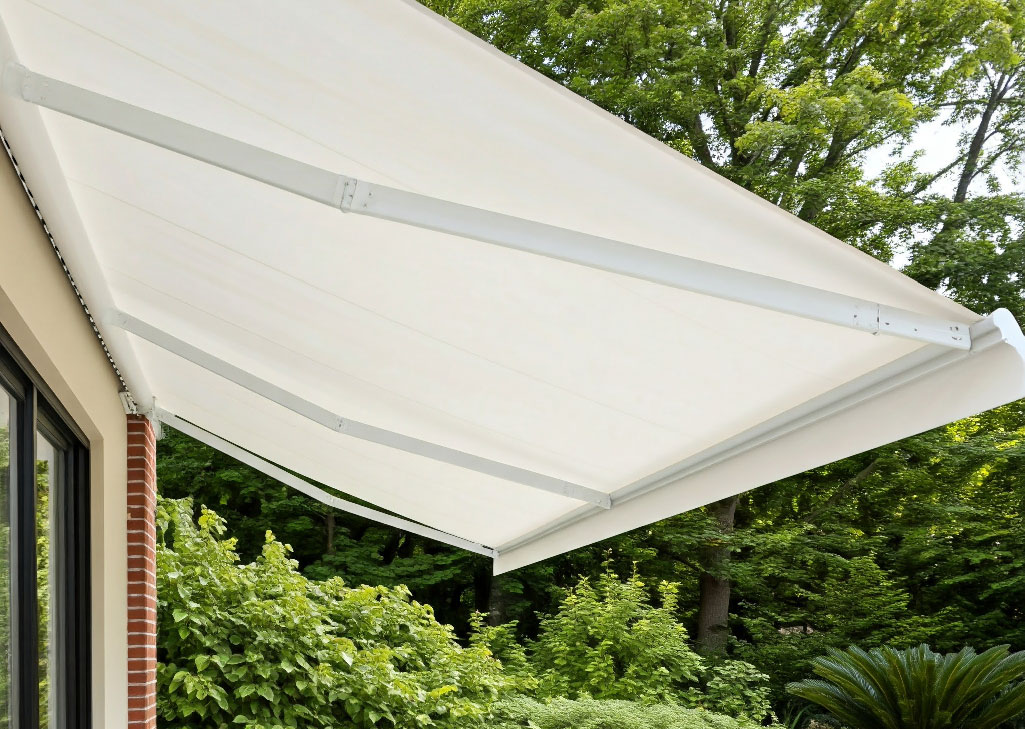
Similar to the motorized awnings above, cassette awnings are retractable awnings that fully enclose the covering and mechanisms within a protective casing when retracted. Available in various sizes and lengths, the main drawback of cassette awnings will be the overall cost, which is more expensive than your typical retractable, but non-cassette version awnings.
Benefits: Cassette awnings provide maximum protection from the elements and significantly extends the life of the covering, motorized unit, and frame.
Compare Different Types of Awnings
Choosing the right awning depends on various factors like flexibility, durability, cost, and ease of installation. The table below provides a clear comparison of different types of awnings to help you make an informed decision.
| Type | Retractable | Fixed | Freestanding | Portable | Material (Fabric/Metal) |
| Flexibility | High | Low | Medium | High | Depends on material |
| Durability | Medium | High | Medium | Low | High for metal, medium for fabric |
| Cost | Moderate to High | Low to Moderate | High | Low | Varies by dmaterial |
| Ease of Installation | Moderate | Easy | Moderate | Easy | Moderate to Hard (metal) |
Frequently Asked Questions (FAQs) about Awnings
1. What is the lifespan of a typical awning?
Depending on the material, maintenance, exposure to the elements or pollution, awnings normally last between 5 to 15 years. Fixed type awnings tend to last longer than retractable ones, and in terms of material, metal awnings tend to last longer than fabric ones.
2. Are awnings easy to clean and maintain?
Most awnings can be easily cleaned with mild soap and water. Awnings with fabric coverings accumulate dirt and debris over time and may require occasional deep cleaning and reapplication of waterproofing agents in order to extend its lifespan.
3. Are there any permits required for awning installation?
Building code and permits differ from the area and country located. Be sure to check with your local authorities to determine if any permits are required. Understanding the local building codes also helps in choosing the product fit for your environment.
(Read more: Installing Awnings: Step-by-Step Guide for a Flawless Installation!)
4. Are awnings capable of withstanding strong winds?
Yes and no. Fixed and metal awnings are usually the strongest with free standing awnings a close second. Retractable awnings should be retracted in high winds unless securely anchored. Although fixed and metal awnings are more wind-resistant, they should still be assessed based on local conditions.
The awnings listed above are among the most common. It is important to choose the right awning according to your specific needs, budget, and preferred outlook. Awnings can be a welcoming and valuable addition to properties regardless of its intended purpose – be it sun protection, style, or energy savings.
Related articles:
Clear Pergola Roofing | The Benefits of PC Pergola Roof Panels
Essential Guide to Outdoor Polycarbonate Roofing Design Ideas!
Polycarbonate Heat Resistance: Part 2 – Applications & Solutions