
Blog
Polyvinyl Chloride Greenhouse vs Polycarbonate: Which is Best?

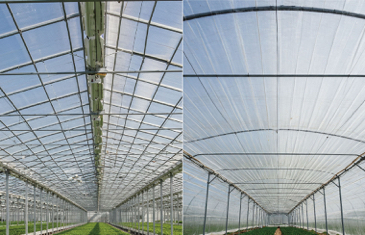
Before we dive into this topic between polyvinyl chloride greenhouse and polycarbonate greenhouse comparison, and decide on which glazing material is the best, understanding the properties of each and how it affects or supplements the performance of a greenhouse, is a must.
What is Polyvinyl Chloride (PVC)?
Polyvinyl chloride, known as PVC for short, was found and synthesized in the late 19th century but was only successfully commercialized early in the 20th century but has been around ever since.
PVC comes in both rigid and flexible forms, which is commonly seen in pipes large and small, plastic bottles, doors, windows, roofing sheets, or windows. PVC with plasticizer additives becomes more flexible and are used to produce products for plumbing, electric cable insulation, flooring, signages, inflatable products such as boats and swimming pools, or rubber substitutes such as floor mats or insulation panels.
Polyvinyl Chloride Properties
• Cost
A polyvinyl chloride greenhouse is relatively inexpensive, especially when compared to other glazing materials. Being used extensively in various products and applications makes PVC a widely available material on the market.
• Strength
PVC is a versatile, strong and durable material. It has a tensile strength of about 7,500 pounds per square inch (psi), and flexural strength of about 12,800 psi. It also has a flexural modulus of elasticity of about 481,000 psi.
• Insulation
PVC has excellent insulating properties. Being a thermoplastic, PVC has an inherent insulation that aids in reducing condensation formation and resisting internal temperature changes for hot and cold liquids.
• Fire Resistance
While the polyvinyl chloride greenhouse is fire resistant, the raw material requires heat stabilizers for improved performance at higher temperatures. Traditional PVC products have a maximum operating temperature around 60 °C (140 °F), and without heat stabilizer additives, heat distortion begins to occur afterwards.
• Weathering
PVC is considered a low maintenance material and widely used in the building and construction industry. PVC products do not decompose and can withstand tough conditions behind building walls, such as exposure to changing temperatures and dampness.
It is also used extensively as waste pipes, drainpipes, gutters or downspouts due to its strong resistance against chemicals, sunlight, and oxidation from water.
Polyvinyl Chloride Greenhouse: Safety Concerns
A polyvinyl chloride greenhouse can release toxic chemicals if not handled properly. Inhalation of these chemicals may lead to respiratory issues, so care must be taken during installation and disposal.
Is a Polyvinyl Chloride Greenhouse Eco-Friendly?
Although Polyvinyl chloride (PVC) is recyclable and which can be done by mechanical or chemical methods or being used as feedstock for energy recovery, it is not an eco-friendly material, as it is non-biodegradable and steadily accumulates over-time, and harms animals and humans through ingestion in the form of microplastics. PVC is also considered one of the most toxic plastics and environmentally damaging throughout its lifecycle – from production, use to disposal.
- Production: PVC is resource-intensive and releases toxic chemicals like dioxins during production.
- Use: PVC releases toxic chlorine-based chemicals during use.
- Disposal: PVC waste is resistant to decomposition and often releases harmful chlorinated compounds when incinerated or stored.
PVC does have some benefits, which comes in the form of lower CO2 emissions when compared to another common greenhouse glazing material, glass. PVC products offer better energy efficiency through low thermal conductivity when compared to aluminum or metal profiles, which contributes to lowering the overall thermal efficiency of the greenhouse structure as a whole.
What is Polycarbonate (PC)?
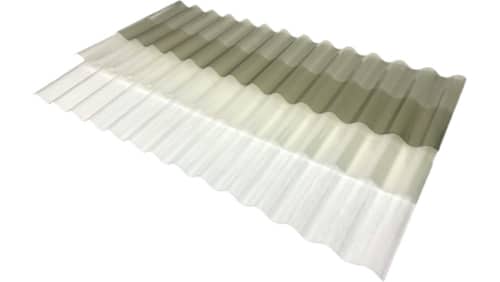
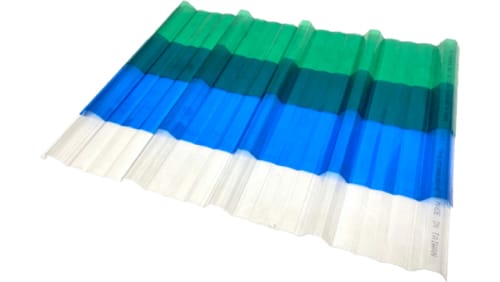
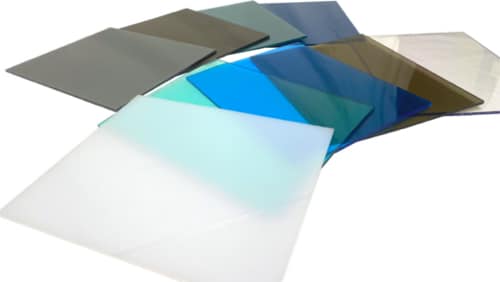
Polycarbonate is a rigid, transparent plastic available in single, double, or multi-wall panels. It provides excellent insulation and durability, making it a popular choice for long-term greenhouses. Scientifically speaking, Polycarbonate is a group of thermoplastic polymers made by the condensation of carbonic acid and Bisphenol A (BPA). It combines a plethora of amazing mechanical and thermal properties which we’re going to name a few.
Polycarbonate Properties
• Extremely High Impact Resistance
Nearly unbreakable, VULCAN Polycarbonate sheets have 250 times the impact strength over glass and 10 times over FRP and Acrylic, which lowers the risk of breakage even when subjected to violent blows from heavy objects. 250 times the impact strength over glass and 10 times over FRP and Acrylic, which lowers the risk of breakage even when subjected to violent blows from heavy objects.
• High Resistance to Climatic Change
Using UV-absorbing agents (benzotriazoles) as surface coating, VULCAN PC sheets are protected against loss of clarity due to the yellowing caused by extreme heat and sunlight. VULCAN Polycarbonate sheets use only Clariant CESA Light UV and Light Stabilizers; which absorb 99.5% of harmful UV wavelengths between 290~390nm.
• Design Flexibility
VULCAN polycarbonate sheets can be tailored to provide optimal light transmission or solar selective properties, enabling the designer to create interesting solutions for naturally lit interiors. Our sheets can also be cold or thermoformed to the desired shape and spec.
• Fire Retardant
One of the key characteristics of this high polymer is its excellent resistance to flame and stability in heat, making it a suitable choice in dry, heated areas, and is also a good choice for household and industrial glazing.
• Chemical Resistance
Polycarbonate exhibits good chemical resistance against diluted acids, aliphatic hydrocarbons and alcohols, moderate chemical resistance against oils and greases. PC is readily attacked by diluted alkalis, aromatic and halogenated hydrocarbons.
• Energy Saving
VULCAN polycarbonate sheets can be produced with a wide range of proprietary materials that have better thermal insulation properties than other light transmitting glazing materials, thus making them the first choice for energy efficient light transmitting constructions.
These properties lead to tremendous energy savings (by reducing the load on air conditioning), resulting in huge cost savings (in terms of Initial capital – lower tonnage and required & recurring cost – owing to the lower power consumption).
• Ease of Handling and Installation
The light weight of VULCAN polycarbonate sheets makes them easy to handle and can be cut to fit at site with minimum tooling. Lighter weight also eliminates the need for heavy support structures, and savings on transportation, meaning reduced cost.uctures, and savings on transportation, meaning reduced cost.
(Read more: Polycarbonate Properties | A Must-Read PC Material Guide)
Polycarbonate Greenhouse: Safety Concerns
• Strength, Durability, and Longevity
Polycarbonate is well known for its safety as building material for construction applications, and is stronger, if not the strongest, lightest, does not shatter, and also provides the most clarity among glazing materials, which is why it is so popular. It is also non-toxic when in use, which means that it doesn’t emit harmful substances under normal conditions.
• BPA Concerns
Some polycarbonate plastics have been associated with Bisphenol-A (BPA), a chemical that may leach out under high temperatures or certain conditions. However, products used in construction (like greenhouse panels) are typically formulated to minimize any BPA concerns. Additionally, many manufacturers now offer BPA-free polycarbonate options.
Is a Polycarbonate Greenhouse Eco-Friendly?
Polycarbonate is considered a fully recyclable product which can be done via shredding, granulating, or pyrolysis. When used as glazing materials, it is best to use virgin polycarbonate resin, as it will provide the best clarity and retain its original physical properties.
For consumers that are on a budget, there is a choice of recycled Polycarbonate sheets – used polycarbonate sheets are first shredded, molted down to granules, and the mixed with a certain percentage of virgin polycarbonate resin before being fed through co-extrusion lines and t-dies to produce sheets. Depending on the percentage of recycled resin used, polycarbonate sheets made from recycled material normally have diminished physical properties and should be taken into consideration when making a choice.
*BEWARE! Note that some manufactures deliberately add PE resin into the mix, as PE blends perfectly with polycarbonate and cannot be detected with the naked eye fresh out of production, but as a matter of fact, significantly diminishes its physical properties and lifespan.
(Read more: What Is Polycarbonate Roofing? Pros and Cons List)
Polyvinyl Chloride Greenhouse vs Polycarbonate Greenhouse
Mechanical Properties
| Properties | Polycarbonte (Extruded) | PVC (High Impact) |
| Mechanical | ||
| Tensile strength, Ultimate (σt) | 28.0 – 75.0 Mpa | 30.0 – 44.9 Mpa |
| Tensile strength, Yield (σt) | 39.0 – 120 Mpa | 76.0 – 84.0 Mpa |
| Elongation (ε) at break | 6.10 – 138 % | 26.0 – 110 % |
| Compressive strength (σc) | 18.0 – 86.2 Mpa | 0.5 to 2.0 Mpa |
| Hardness—Rockwell | M70~75 | M100 – 107 |
| Izod Impact Strength (Notched) | 0.481 – 9.61 J/cm | 0.600 – 13.9 J/cm |
| Thermal | ||
| Deflection Temperature at 0.46 MPa (66 psi) | 127 – 147 °C (261 – 297 °F) | 64.4 – 93.9 °C (148 – 201 °F) |
| Glass transition temperature (Tg) | 147 °C (297 °F) | 82 °C (180 °F) |
| Melting point | 220 – 315 °C (428 – 599 °F) | 174 – 210 °C (345 – 410 °F) |
| Flammability, UL94 | HB – 5VA | V-0 – 5VA |
Greenhouse Features
| Feature | PVC Greenhouse | Polycarbonate Greenhouse |
| Durability | Weak (1-5 years lifespan) | Strong (10-20 years lifespan) |
| Insulation | Poor (heat escapes easily) | Excellent (especially double-wall) |
| Light Transmission | High (90%) but degrades over time | Moderate (80-85%) but diffuses light well |
| Cost | Very cheap | More expensive upfront |
| UV Resistance | Low (yellows and cracks over time) | High (UV-resistant coatings available) |
| Ease of Installation | Very easy (lightweight and flexible) | Requires more effort (rigid panels) |
| Weather Resistance | Weak (tears in strong winds) | Strong (handles wind, hail, and snow) |
| Maintenance | Needs frequent replacement | Low maintenance, long-lasting |
| Best Use Case | Temporary, budget-friendly greenhouses | Long-term, durable greenhouses |
Which Greenhouse Type is Right for You?
If you’re serious about building a long-lasting greenhouse for gardening, polycarbonate is the better option due to its durability, insulation, and weather resistance. However, if you just need a quick and affordable solution, a polyvinyl chloride greenhouse also works, albeit as more of a hobby greenhouse.
Choose a Polyvinyl Chloride Greenhouse If:
- You need a budget friendly, short term greenhouse that will last for a season or two.
- You are on a tight budget, want something easy to assemble and disassemble, and do not have the luxury of spending a lot of time taking care of the greenhouse.
- You live in a mild climate with minimal wind or snow, and need only a basic covered area for plant growth.
Choose a Polycarbonate Greenhouse If:
- You want a long-term investment with better insulation; with a sturdy structure with adequate hardware which is capable of expanding into a more sophisticated setup. (i.e. better lighting, ventilation, thermostat, etc…)
- You live in an area with harsh weather (cold winters, strong winds, or hail) and require a better setup to withstand the elements.
- You want to create better overall living conditions which offer sufficient ventilation, lighting, irrigation, temperature regulation along with other essentials for healthier plant growth.
Read more:
Greenhouse Materials: How to Pick the Right Frame and Covering
Polycarbonate Greenhouse: The Benefits of Pearly Technology
Designing A Greenhouse: Benefit, Considerations, and Materials!